
Introduction
Digital marketing is changing rapidly. Search engines are becoming smarter, customers expect more personalized experiences, and artificial intelligence (AI) is transforming the way businesses attract and engage their audiences.
Traditional SEO strategies are still important, but simply targeting keywords and creating large amounts of content is no longer enough. Businesses now need to understand what their audience wants, how they search, and what type of content is most relevant to them.
This is where AI-driven personalization and SEO optimization come together.
AI can analyze user behavior, search trends, customer preferences, and content performance to help marketers create more relevant experiences. When combined with a strong SEO strategy, this can improve visibility, engagement, user experience, and ultimately conversions.
For digital marketers, the future is not just about ranking higher on Google. It is about showing the right content to the right audience at the right time.
What Is AI-Driven Personalization?
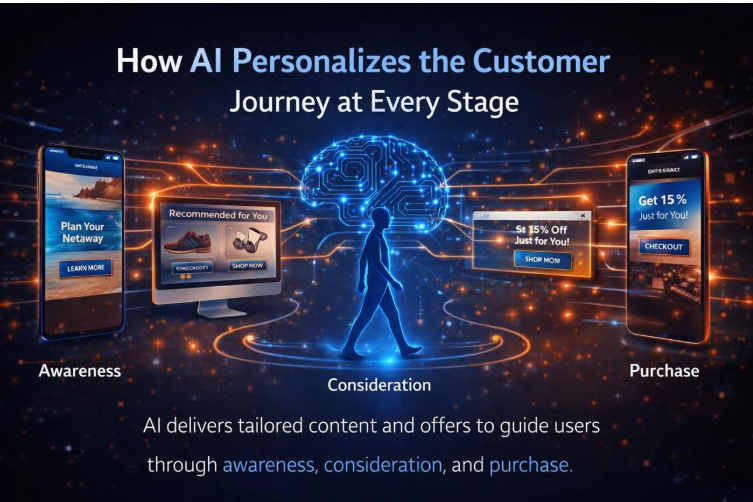
AI-driven personalization means using artificial intelligence and data to provide users with content, recommendations, offers, or experiences based on their interests and behavior.
Instead of showing every visitor the same message, marketers can use AI to understand different audience segments.
For example:
- A first-time visitor may see an introductory offer.
- A returning visitor may see recommended services.
- A user who previously viewed a specific product may receive related content.
- A customer searching for a particular service may be shown highly relevant information.
This makes digital marketing more customer-focused.
Why Personalization Matters
People are constantly exposed to advertisements and online content. Generic marketing messages can easily be ignored.
Personalized content can make a visitor feel that a website understands their specific needs.
For a digital marketer, this creates an opportunity to move from:
“Here is what we offer.”
to:
“Here is how we can solve your specific problem.”
That small change can make a significant difference in engagement and conversion rates.
How AI Can Improve SEO
AI does not replace SEO. Instead, it can make SEO research, planning, optimization, and analysis more efficient.
Here are some of the most useful ways AI can support an SEO strategy.
1. Smarter Keyword Research
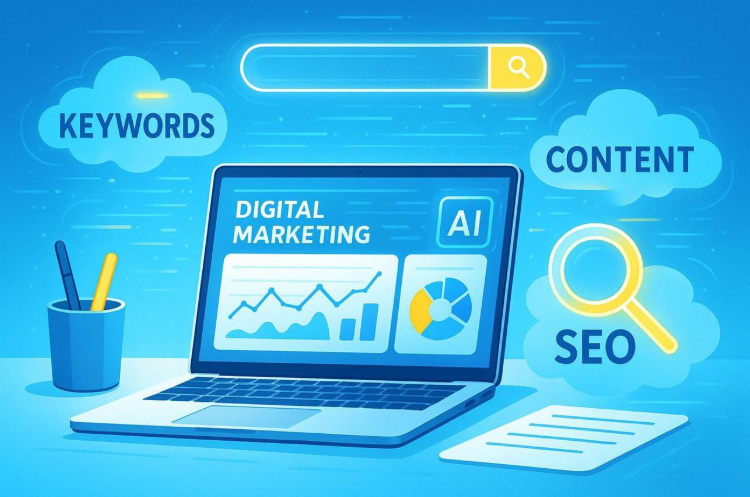
Keyword research is one of the foundations of SEO.
AI tools can help marketers analyze:
- Search intent
- Related search terms
- Long-tail keywords
- Question-based searches
- Topic relationships
- Search trends
- Competitor content
- User interests
Instead of targeting only a broad keyword such as:
“Digital marketing”
a marketer can identify more specific searches such as:
“digital marketing services for small businesses”
or:
“best digital marketing strategy for local businesses.”
Long-tail and intent-focused keywords can help businesses attract visitors who are more likely to need their services.
2. Understanding Search Intent
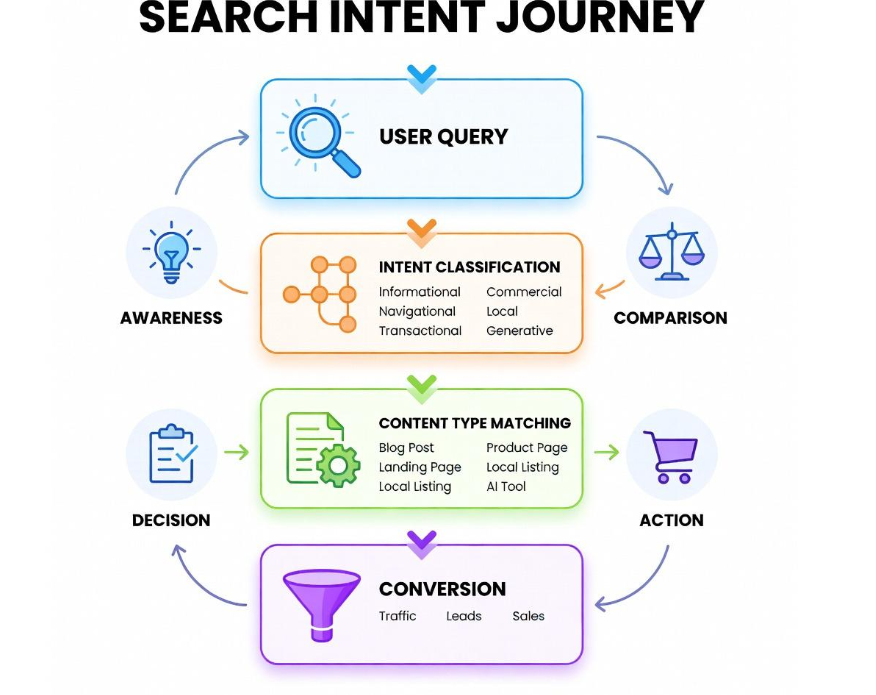
Ranking for a keyword is not enough.
A successful SEO strategy needs to understand why someone is searching.
Search intent generally falls into several categories:
Informational Intent
The user wants to learn something.
Example:
“What is local SEO?”
Navigational Intent
The user is looking for a specific website or brand.
Example:
“Google Search Console login.”
Commercial Intent
The user is researching before making a purchase.
Example:
“Best SEO agency for small businesses.”
Transactional Intent
The user is ready to take action.
Example:
“Hire an SEO expert in Malappuram.”
AI can help marketers identify patterns in search queries and create content that matches the user’s actual intent.
3. Personalized Content Creation
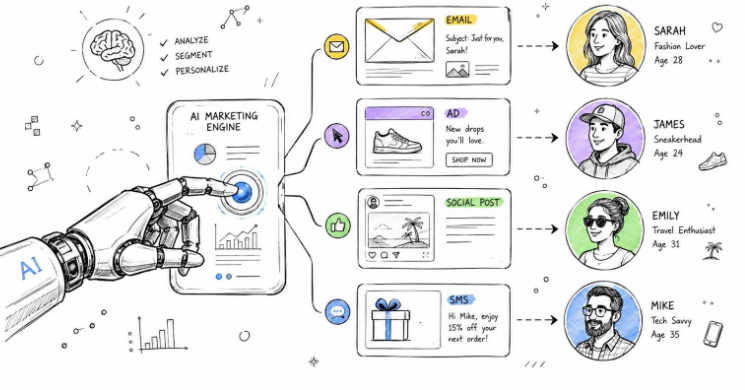
AI can help marketers understand different audience groups and develop content for each segment.
For example, a digital marketing website could have different content for:
- Local business owners
- E-commerce businesses
- Startups
- Personal brands
- Service-based businesses
- Students and entrepreneurs
Each audience has different problems.
A restaurant owner may want more customers from Google Maps, while an e-commerce business may be more interested in product SEO and paid advertising.
Instead of creating one generic marketing message, personalization allows marketers to create audience-specific content.
4. AI-Powered Content Optimization
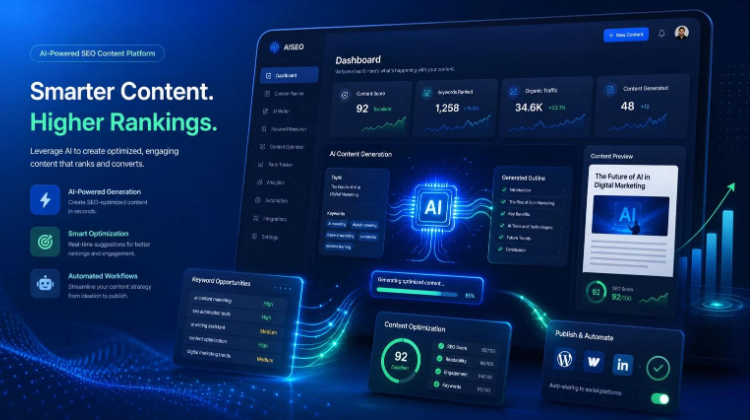
Creating content is only one part of SEO.
The content must also be optimized for search engines and, more importantly, for humans.
AI can assist marketers in identifying:
- Missing topics
- Related concepts
- Content gaps
- Weak headings
- Poor readability
- Keyword opportunities
- Internal linking opportunities
- Frequently asked questions
However, AI-generated content should not simply be published without review.
A professional digital marketer should add:
Experience + Strategy + Original Insights + Human Creativity
AI should be treated as a marketing assistant, not a replacement for marketing expertise.
5. Dynamic Website Personalization
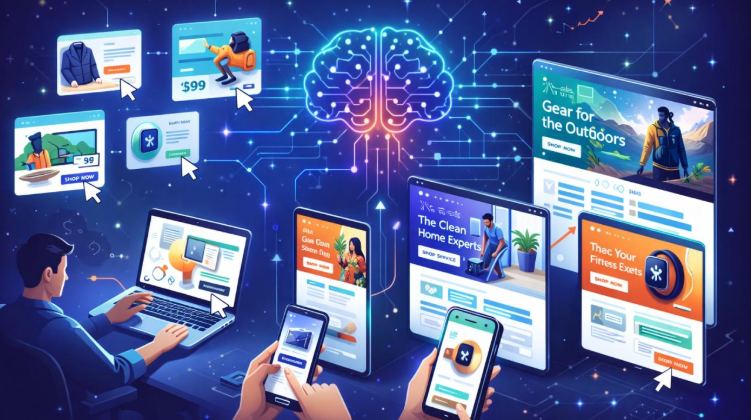
One of the most powerful applications of AI is website personalization.
A website can potentially adapt its content based on factors such as:
- Previous interactions
- Visitor behavior
- Geographic relevance
- Device type
- Referral source
- Content interests
- Customer stage
For example, a local digital marketing website could present different messaging to visitors searching for SEO services compared with visitors interested in social media marketing.
The goal is simple:
Make every visitor’s experience more relevant.
6. AI and Local SEO
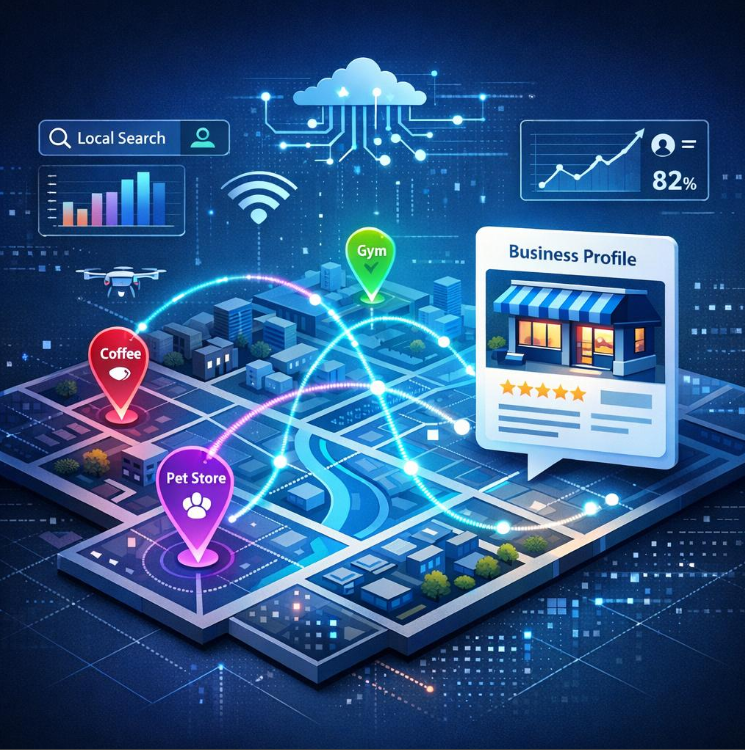
AI-driven strategies can be particularly useful for local businesses.
Local SEO focuses on helping businesses become visible when people search for products or services in a specific area.
For example:
“Digital marketer in Vengara”
has a different intent from:
“Digital marketing services in Kerala.”
A strong local SEO strategy should consider:
- Location-based keywords
- Google Business Profile optimization
- Local landing pages
- Customer reviews
- Local content
- NAP consistency
- Local backlinks
- Location-specific search intent
AI can help analyze local search patterns and identify content opportunities.
For businesses targeting specific locations such as Vengara, Malappuram, or Kozhikode, combining local SEO with personalized content can create a stronger connection with the target audience.
7. Using AI to Understand Customer Behavior
Modern SEO is increasingly connected to user behavior.
AI can help marketers analyze patterns such as:
- Which pages receive the most attention
- Where users leave a website
- Which content generates engagement
- Which keywords attract visitors
- Which pages generate leads
- What users search for before converting
These insights can help marketers improve their strategies.
For example, if visitors frequently read a blog about SEO but rarely contact the business, the marketer could improve the page by adding:
- Relevant service links
- Case studies
- Stronger calls to action
- FAQs
- Consultation options
- Related content
This transforms SEO from a traffic-focused strategy into a business-growth strategy.
8. AI-Powered SEO Competitor Analysis
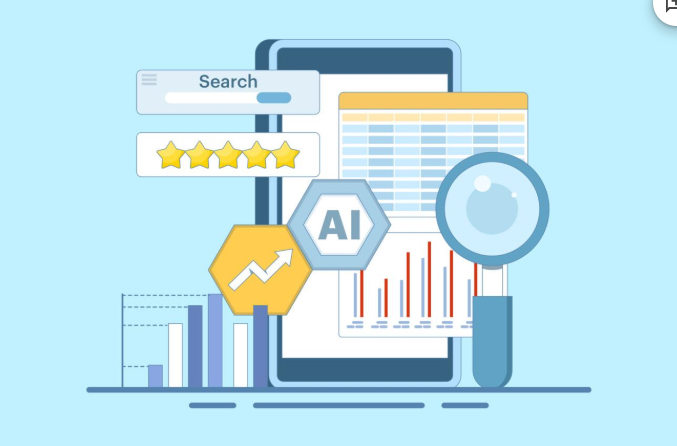
Understanding competitors is another important part of SEO.
AI can help marketers analyze competing websites to identify:
- Topics they cover
- Keywords they target
- Content gaps
- Backlink opportunities
- Search visibility
- Content formats
- User questions they answer
The objective should not be to copy competitors.
Instead, marketers should ask:
“What can I provide that is more useful, more specific, or more valuable?”
This creates an opportunity to build a stronger content strategy.
AI Personalization + SEO: A Powerful Combination
AI personalization and SEO work best when they are connected.
Consider a simple customer journey:
Search → Website → Personalized Content → Engagement → Trust → Conversion
SEO helps bring the right people to the website.
Personalization helps make the experience relevant.
Content builds trust.
A strong call-to-action encourages conversion.
This means SEO should not be treated as an isolated marketing activity.
It should be part of a complete digital marketing strategy.
Practical AI-Driven SEO Strategy for Businesses
A digital marketer can implement an AI-assisted strategy using the following process.
Step 1: Understand the Audience
Identify:
- Who are they?
- What problems do they have?
- What are they searching for?
- What influences their buying decision?
Step 2: Research Search Intent
Analyze the keywords and questions used by the target audience.
Step 3: Build Topic Clusters
Instead of creating unrelated blog posts, create a central topic supported by related content.
For example:
Main Topic: Digital Marketing
Supporting topics:
- SEO
- Local SEO
- Social Media Marketing
- Content Marketing
- Google Ads
- Email Marketing
- AI Marketing
Step 4: Create Valuable Content
Use AI for research assistance and ideation, but add human expertise, examples, opinions, and practical experience.
Step 5: Optimize for Search
Focus on:
- Search intent
- Titles
- Headings
- Meta descriptions
- Internal links
- Relevant keywords
- Helpful content
- Page experience
- Structured information where appropriate
Step 6: Personalize the User Experience
Create content and landing pages that address different audience needs.
Step 7: Measure Results
Track:
- Organic traffic
- Rankings
- Engagement
- Leads
- Conversions
- Click-through rates
- Returning visitors
Then continuously improve the strategy.
Common Mistakes to Avoid
AI can make digital marketing faster, but using it incorrectly can create problems.
❌ Publishing AI Content Without Editing
AI-generated content may be generic or inaccurate.
❌ Keyword Stuffing
Repeating keywords excessively can make content unnatural and provide a poor user experience.
❌ Creating Content Only for Search Engines
Content should primarily help people.
❌ Ignoring Search Intent
A page can rank for a keyword and still fail to satisfy the visitor.
❌ Copying Competitors
Competitor research should inspire strategy, not duplication.
❌ Focusing Only on Traffic
Thousands of visitors mean little if they never become customers.
The real goal should be:
Relevant Traffic → Engagement → Leads → Customers
The Future of AI and SEO
Search is becoming increasingly conversational and personalized.
Users are no longer relying only on short keyword searches. They are asking detailed questions and expecting direct, useful answers.
This means digital marketers need to focus on:
Relevance over repetition.
Intent over keywords alone.
Experience over automation.
Value over volume.
AI will continue to change how marketers conduct research, create content, analyze data, and understand audiences.
But technology alone does not create a successful marketing strategy.
The marketer’s ability to understand people, businesses, markets, and customer psychology remains essential.
Final Thoughts
AI-driven personalization and SEO optimization are not separate trends. Together, they represent a shift toward a smarter and more customer-focused approach to digital marketing.
SEO brings potential customers to your website.
AI helps you understand them.
Personalization makes their experience more relevant.
Strategic content builds trust.
And a well-designed conversion journey turns attention into business results.
For businesses that want to grow online, the future belongs to marketers who can combine AI technology with human strategy.
The goal isn’t simply to rank #1. The goal is to become the most relevant answer for the right customer.
About the Author
BADI AL ZAMAN is a digital marketer focused on SEO, digital marketing strategy, content marketing, social media marketing, and online brand growth. His approach combines creative marketing with data-driven strategies to help businesses build stronger digital visibility and connect with the right audience.