How to Optimize Content for AI Search and Answer Engines (AEO/GEO)
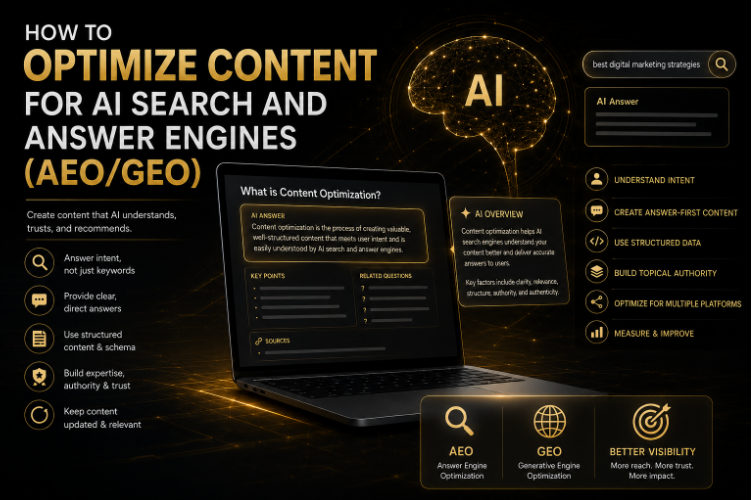
Search is changing. People are no longer relying only on traditional search results. They are increasingly asking AI-powered tools questions and expecting direct, useful answers.
This shift has created new opportunities for digital marketers through Answer Engine Optimization (AEO) and Generative Engine Optimization (GEO).
Instead of optimizing content only to rank in a list of search results, marketers now need to create content that can be understood, trusted, summarized, and referenced by AI-powered search and answer engines.
The good news? The fundamentals are still familiar: understand your audience, answer real questions, demonstrate expertise, and create genuinely useful content.
What Are AEO and GEO?
Answer Engine Optimization (AEO)
AEO focuses on creating content that provides clear answers to questions users ask through search engines, voice assistants, and answer-focused platforms.
For example, instead of searching:
“digital marketing definition”
a user might ask:
“What is digital marketing and how does it help a small business?”
AEO helps your content provide a direct, useful answer to that question.
Generative Engine Optimization (GEO)
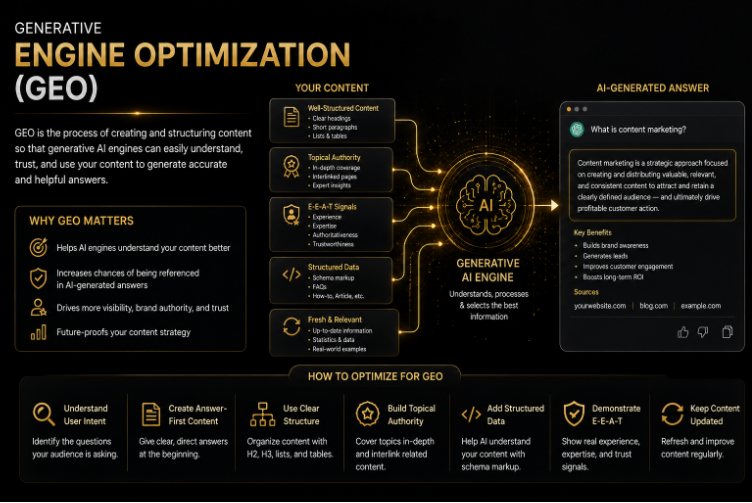
GEO focuses on making content easier for generative AI systems to understand and potentially use when generating answers.
The focus is not simply on keywords. It includes:
- Clear information
- Strong topical coverage
- Reliable sources
- Demonstrated expertise
- Logical content structure
- Natural language
- Helpful explanations
In simple terms:
SEO helps people discover your content.
AEO helps answer their questions.
GEO helps make your content easier for AI systems to understand and potentially reference.
Why AEO and GEO Matter for Digital Marketers
The way people search is becoming more conversational.
Users may ask complete questions instead of entering short keyword phrases.
For example:
Traditional search:
“SEO services Vengara”
Conversational search:
“Who provides affordable SEO services for small businesses in Vengara?”
This creates an important opportunity for digital marketers.
Instead of creating content around isolated keywords, marketers can build content around customer questions, search intent, problems, and solutions.
1. Understand How AI Search Works
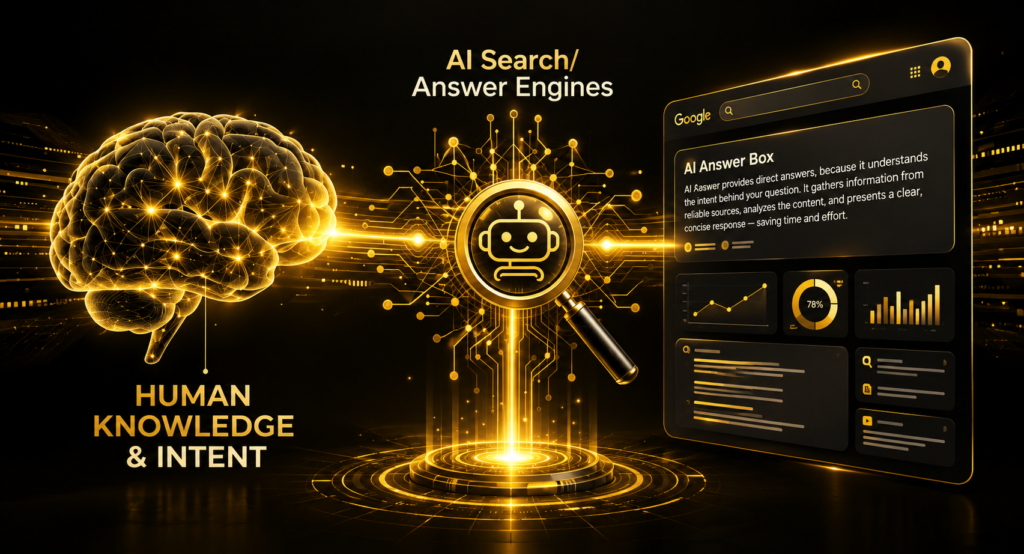
AI-powered search systems don’t simply look for pages containing an exact keyword.
They need to understand what a piece of content means and determine whether it provides useful information.
This makes content structure extremely important.
When creating content, ask:
- What question is the customer asking?
- What information do they actually need?
- Can I answer the question clearly?
- Can the information be supported by reliable evidence?
- Does the page provide enough context?
Think beyond:
“How can I rank for this keyword?”
Instead ask:
“How can I become the best answer to this question?
Create Answer-First Content
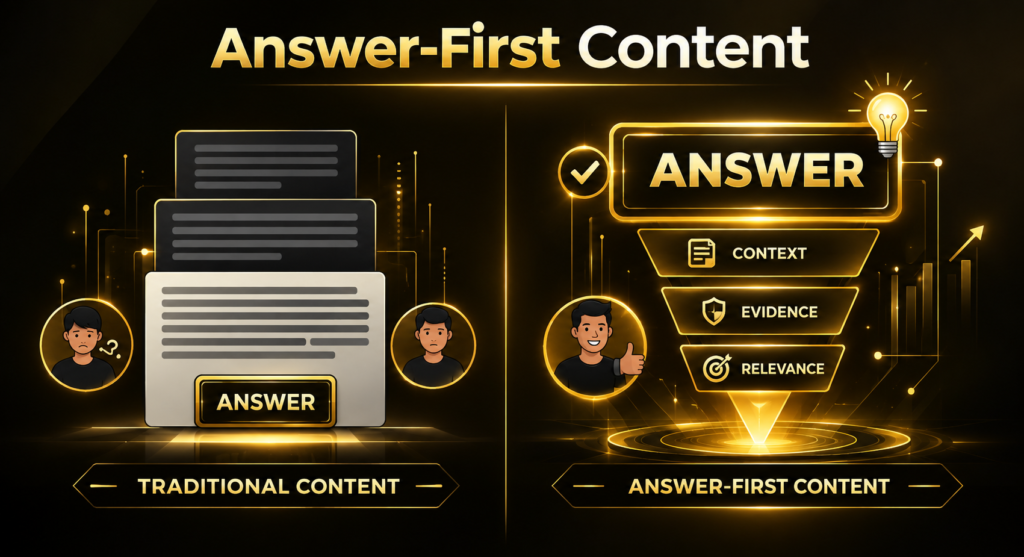
One of the simplest AEO strategies is to answer the main question quickly.
Don’t make readers go through five paragraphs before they find the answer.
For example:
What Is Social Media Marketing?
Social media marketing is the use of social media platforms to promote a business, connect with customers, build brand awareness, and generate leads or sales.
Then provide the detailed explanation below.
This structure is useful for both readers and answer engines.
A good approach is:
Question → Direct answer → Explanation → Example → Supporting information
3. Use Clear Structure and Formatting
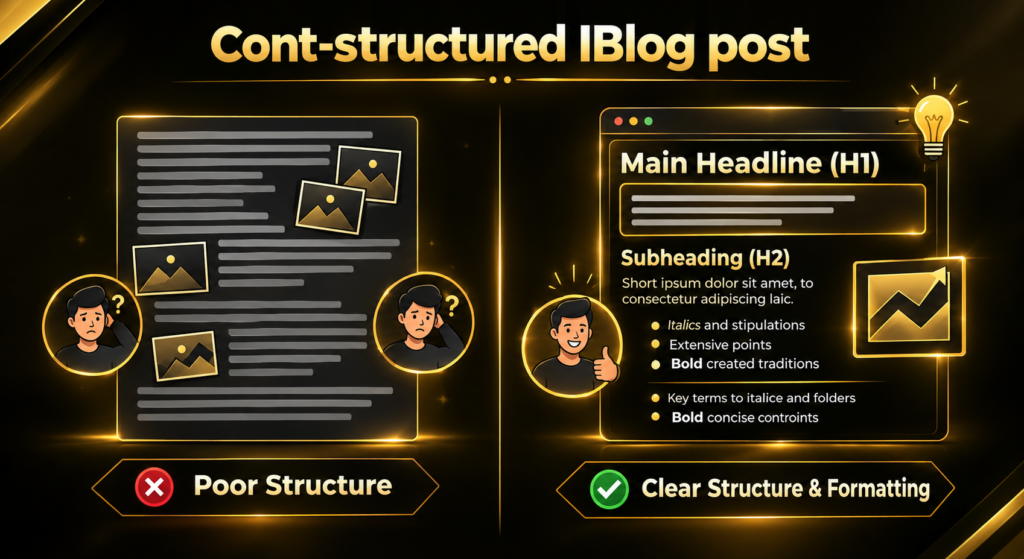
Well-structured content is easier for humans to read and easier for machines to interpret.
Use:
- One clear H1
- Descriptive H2 headings
- H3 subheadings
- Short paragraphs
- Bullet points
- Numbered lists
- Tables where useful
- FAQs
- Step-by-step explanations
Avoid creating huge blocks of text.
For example, instead of writing one long section about SEO, break it into:
What Is SEO?
Why Is SEO Important?
How Does SEO Work?
What Are the Main Types of SEO?
How Can Small Businesses Improve SEO?
This creates a much clearer information structure.
4. Target Conversational and Long-Tail Queries
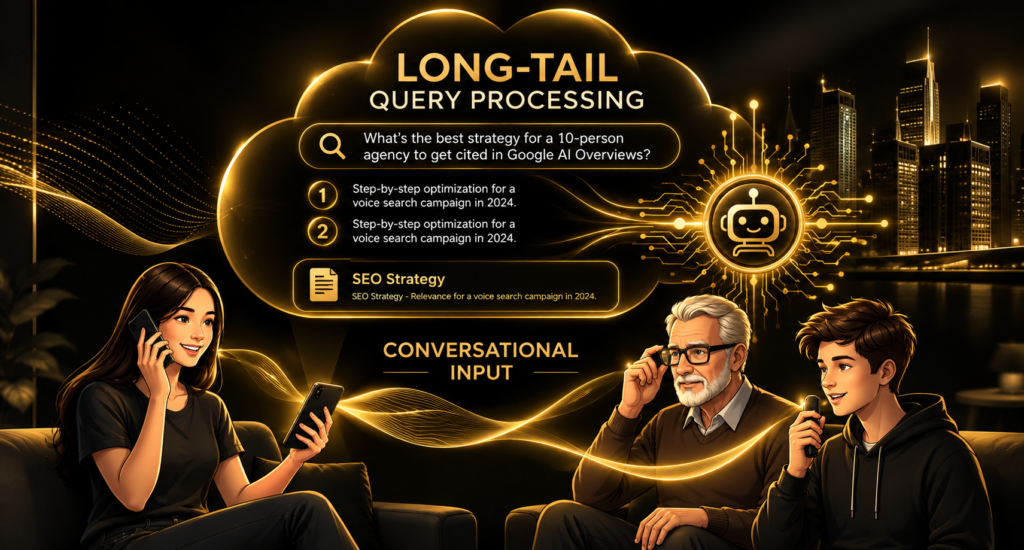
AI search is making conversational queries increasingly important.
People naturally ask questions using words such as:
- What
- Why
- How
- Where
- When
- Which
- Best
- Near me
Instead of targeting only:
“Digital marketing”
you could create content around:
“How can digital marketing help a small business?”
“How much does digital marketing cost?”
“What are the best digital marketing strategies for local businesses?”
“How can I get more customers through Instagram?”
These questions provide valuable opportunities to match content with search intent.
5. Build Topical Authority
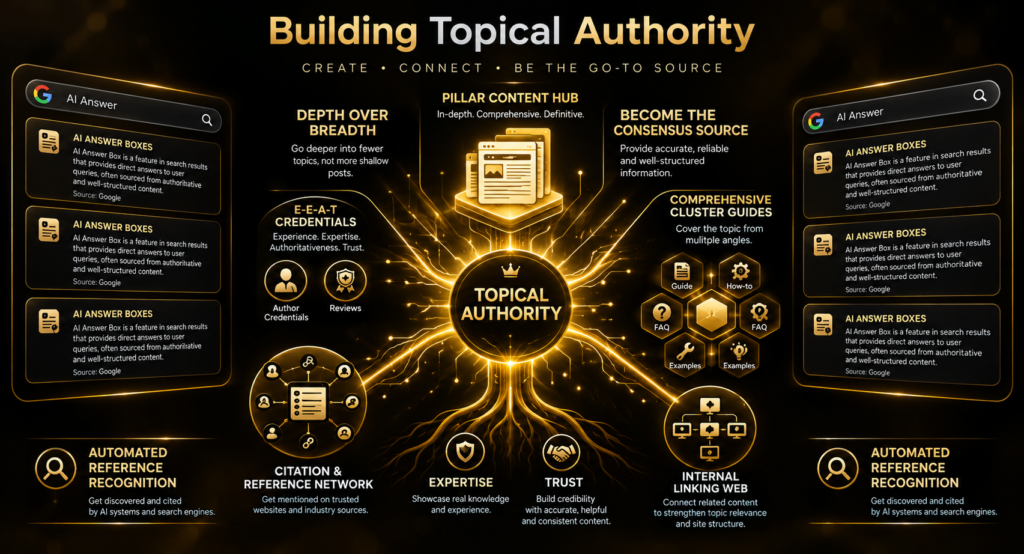
Publishing one article about a topic isn’t always enough.
If you want your website to become a strong resource, create a collection of related content.
For example, a digital marketing website could create a Digital Marketing Topic Cluster:
Digital Marketing
→ SEO
→ Local SEO
→ Social Media Marketing
→ Content Marketing
→ Google Ads
→ Email Marketing
→ Conversion Optimization
→ AEO & GEO
These pages can be internally linked to each other.
This helps visitors discover related information while creating a stronger topical structure for your website.
6. Demonstrate E-E-A-T

Content should demonstrate Experience, Expertise, Authoritativeness, and Trustworthiness.
For a digital marketer, this can be especially powerful.
Don’t only explain what marketing strategies are.
Show what you have actually done.
For example, you could include:
- Campaign examples
- Case studies
- Performance results
- Screenshots
- Marketing experiments
- Client/project experience
- Your professional perspective
- Lessons learned
Instead of saying:
“Social media marketing can increase engagement.”
You could explain:
“In one of my marketing projects, I focused on improving content consistency, audience targeting, and creative testing to increase meaningful engagement.”
Real experience makes content more useful and credible.
7. Optimize Content for Multiple Search Platforms
AI-driven discovery isn’t limited to traditional search engines.
People may discover information through different platforms and AI tools.
Your content strategy should therefore focus on creating high-quality, accessible information rather than trying to optimize for only one platform.
Consider:
- Search engines
- AI answer engines
- Social search
- YouTube search
- Business profiles
- Industry directories
- Relevant communities
The goal is to build a consistent digital presence around your expertise.
8. Use Structured Data Where Appropriate
Structured data helps search engines better understand certain types of content.
Depending on your page, relevant schema types may include:
- Article
- FAQ
- HowTo
- Organization
- LocalBusiness
- Person
- Product
- Review
Schema should accurately describe the content on the page. It should not be used to add information that isn’t actually present.
For a digital marketing portfolio, structured information about your person, services, organization, articles, and projects can help create a clearer understanding of your website.
9. Strengthen Internal Linking
Internal links connect related pages on your website.
For example, this blog about AEO/GEO could link to pages about:
SEO Services
Content Marketing
Social Media Marketing
Google Ads
Local SEO
This creates a connected content ecosystem.
Instead of every article existing independently, your website becomes a network of related information.
.
10. Keep Your Content Updated
AI search and digital marketing are constantly evolving.
A strategy that works today may need to be adjusted tomorrow.
Review important content regularly and update:
- Statistics
- Examples
- Tools
- Screenshots
- Industry developments
- Best practices
- Links
- Outdated information
Don’t update an article simply to change its publication date.
Update it because you have new information that makes the content more useful.
AEO/GEO Content Checklist
Before publishing an article, ask yourself:
✓ Does the article answer a real customer question?
✓ Is the main answer easy to find?
✓ Are the headings clear?
✓ Are the paragraphs easy to scan?
✓ Does the content demonstrate genuine expertise?
✓ Are claims supported where necessary?
✓ Does the article cover the topic comprehensively?
✓ Are related pages internally linked?
✓ Is the information accurate and current?
✓ Does the content provide real value instead of simply repeating existing information?
A Simple AEO/GEO Content Framework
A practical framework for creating AI-friendly content is:
1. Identify the Question
Find out what your target audience actually wants to know.
2. Give the Answer
Provide a concise answer near the beginning.
3. Explain the Topic
Add context, examples, data, and practical advice.
4. Demonstrate Expertise
Add your experience, case studies, original insights, or credible sources.
5. Structure the Information
Use headings, lists, tables, and short sections.
6. Connect Related Topics
Use relevant internal links to build topical depth.
7. Keep It Updated
Review the content and improve it as the topic evolves.
The Biggest Mistake to Avoid
The biggest mistake is treating AEO and GEO as simply another keyword trick.
Adding dozens of question-based keywords to an article doesn’t automatically make it valuable.
AI search optimization should begin with helpful content, not manipulation.
Write for people first.
Make the information accurate.
Answer questions clearly.
Show your expertise.
Then make the content easy for search and AI systems to understand.
Final Thoughts
AEO and GEO represent an important evolution in digital marketing.
The goal is no longer simply to get a website onto the first page of search results.
The bigger goal is to become a trusted source of useful information wherever your audience is searching for answers.
For digital marketers, this means combining traditional SEO with strong content strategy, audience research, technical optimization, personal expertise, and a deep understanding of search intent.
The future belongs to websites that don’t just publish content—but provide answers people genuinely need.